The best water hose timer is the one that matches how you water. A manual timer is the simplest way to stop a single sprinkler on time, while an automatic timer with a rain sensor keeps your whole yard on a set schedule and skips a watering when it has already rained. Below we walk through the two main types, how to choose, and how to set one up, so your garden stays on schedule even when you are away.
What does a water hose timer do?
A water hose timer sits between your outdoor faucet and your hose, and turns the water on and off for you. Instead of remembering to drag out the hose every evening, you set the run time once and let the timer water your lawn, garden beds, or potted plants. It is a small change that keeps watering consistent for new plantings, vegetable patches, and busy households where watering often happens too late or not at all. A good timer also helps you avoid overwatering, because every area gets a planned run time rather than a guess, and it means you never leave a sprinkler running by accident.
Types of water hose timer
Hose timers come in two main styles. The right one depends on how hands on you want to be and whether you want watering to happen automatically.
Manual hose timer
A Manual Hose Timer ($34.00) is the simplest option. There are no dials to program. You press the button to choose how long to water, anywhere from about 10 minutes to an hour, and it shuts the water off on its own when the time is up. It even remembers your last setting, so the next time you can press once and walk away. It runs on three AAA batteries and comes with a 12 month warranty. This is a great pick if you water on your own schedule but want a reliable way to stop the flow so you never leave the sprinkler running.
Automatic hose timer with a rain sensor
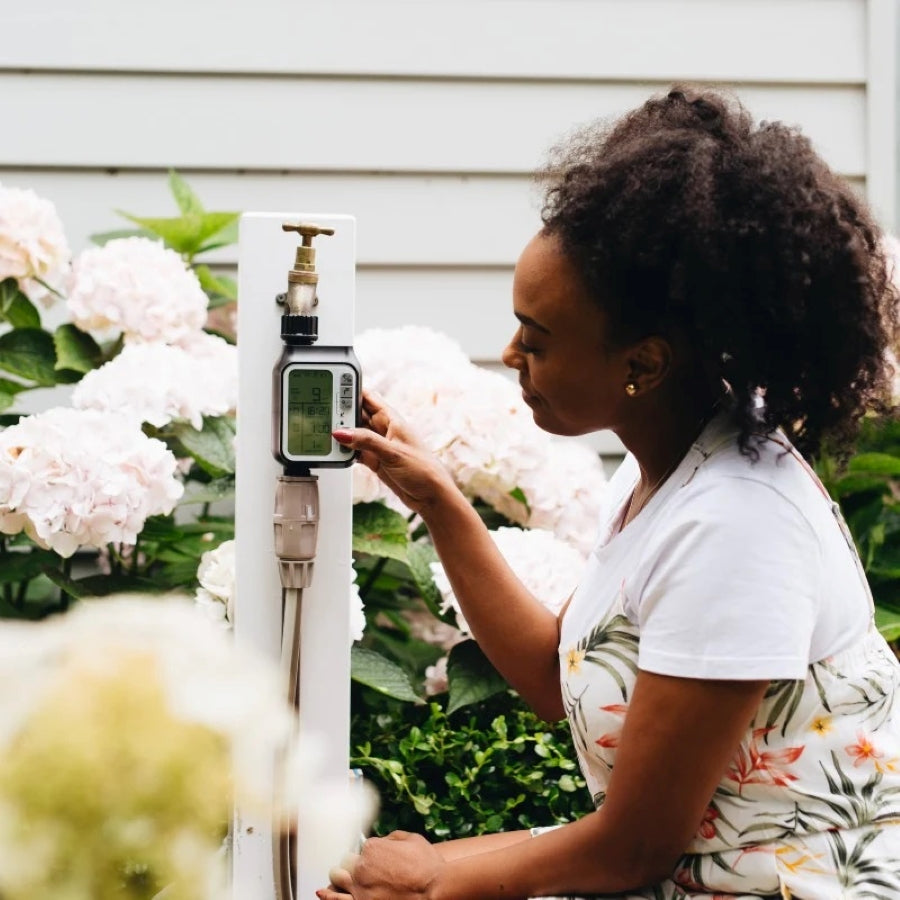
An automatic timer runs on a program you set and needs no daily input. The Automatic Hose Timer with Rain Sensor ($59.50) lets you set up three separate watering schedules for specific days, with each session running anywhere from 1 second to 99 minutes and repeating as often as every hour or as rarely as every 15 days. It has a large LED display, a manual on and off button for watering between scheduled sessions, and a rain sensor on top that cancels a watering when the weather is already wet. It runs on two AA alkaline batteries and fits any standard 3/4" faucet thread, so it is easy to install and easy to move.
Manual or automatic: which do you need?
Both timers do the same core job of stopping the water for you, so the choice comes down to how automatic you want things. A manual timer is ideal when you are happy to start watering yourself and just want a dependable shut off, for example a single sprinkler on the lawn or a soaker hose in a garden bed. An automatic timer earns its place when you would rather set a routine once and forget it, or when you travel and need the garden watered while you are away. If forgetting to water, or forgetting to turn the faucet off, is your main worry, the automatic timer with a rain sensor takes the most off your plate.
Why a rain sensor matters
A rain sensor helps your timer pause watering after rainfall, so it does not run the sprinklers on an already soaked garden. This is especially useful in changing weather, or when the timer runs while nobody is home to notice the storm. On the Automatic Hose Timer with Rain Sensor, the sensor sits on top of the unit and cancels the scheduled watering when it detects wet weather. One thing to keep in mind: the sensor only works when the timer is out in the open, so if it is tucked under a porch or eave it will not read the rain accurately. Skipping a watering you do not need is the kind of small, sensible saving that adds up across a long summer.
How to choose the right water hose timer for your yard
Start with how involved you want to be. If you have one lawn sprinkler and just want it to stop on time, a Manual Hose Timer covers it for very little money. If you want the yard watered on a set routine without thinking about it, or you are often away from home, an automatic timer with a rain sensor is the better fit. Whichever you choose, check that it fits a standard 3/4" outdoor faucet, which the Hoselink timers all do, and think about pairing it with the right delivery tools from our sprinklers range or the wider watering collection.
Set the schedule around your plants, not your habits
Different areas need different watering patterns, and a timer should make those decisions easier rather than locking the whole yard into one routine. New plants often need shorter, more frequent watering while their roots establish, while mature beds usually prefer a deeper soak less often. Lawns, pots, and raised beds all dry out at different speeds, and pots in particular dry fast in summer heat. A helpful rule of thumb is to water deeply and less often for established plants, which encourages stronger roots, and to keep new plantings on a steady, gentler schedule. With the automatic timer you can dedicate one of its three schedules to a group of plants that needs its own routine.
How long should you run a hose timer?
There is no single right answer, because run time depends on your plants, your soil, the weather, and the tool on the end of the hose. A sprinkler covering a lawn moves a lot more water than a soaker hose in a flower bed. Start with a shorter session, check the soil an inch or two down a little while after it runs, and adjust from there. On the Automatic Hose Timer with Rain Sensor you can dial each session anywhere from 1 second to 99 minutes, so it is easy to start small and build up. Watering early in the morning, before the heat of the day, gives plants time to drink before the sun evaporates the surface.
Setting up your hose timer
Installation takes just a few minutes. Screw the timer onto your outdoor faucet using its standard 3/4" thread, and check that the washer inside is seated so the connection does not drip. Connect your hose or sprinkler to the outlet, insert fresh batteries, and set your run time or program. Before you rely on the schedule, run a short manual test so you can see the water flow and confirm the timer opens and closes as expected. Use standard alkaline batteries rather than rechargeables, because the lower voltage of rechargeables can stop the valve from opening and closing reliably.
Caring for your timer through the seasons
A little maintenance keeps a hose timer working for many more seasons. Check the small filter where the timer meets the faucet every so often, and rinse out any grit so the flow stays clear. Keep an eye on the batteries, and put in fresh ones before you head off on vacation so the schedule does not stop while you are away. The most important seasonal step for US yards is freeze protection: when freezing temperatures are on the way, remove the timer from the faucet and store it indoors so water cannot freeze inside the unit and crack it. It is also worth reducing the water pressure at the faucet when you leave home for a long stretch, which limits any water loss in the rare event of a fault.
Compare water hose timers at a glance
| If you want to | Best timer type | Why |
|---|---|---|
| Stop a single sprinkler on time | Manual Hose Timer | One button, remembers your last run time, and shuts off on its own |
| Water on a set routine without daily input | Automatic Hose Timer with Rain Sensor | Three schedules you set once and leave running |
| Avoid watering after rain | Automatic Hose Timer with Rain Sensor | The rain sensor cancels a scheduled watering in wet weather |
| Keep watering while on vacation | Automatic Hose Timer with Rain Sensor | Set sessions up to 15 days apart and put your feet up |