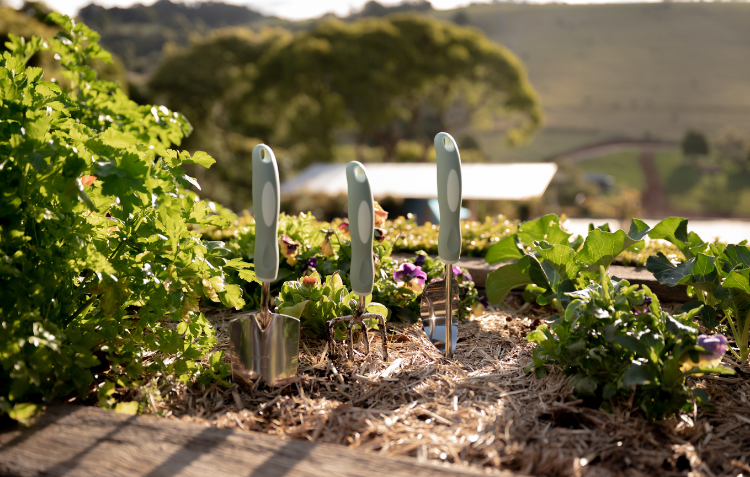
What are the essential garden hand tools every gardener needs?
The three essential garden hand tools are a trowel, a garden fork, and a hand weeder. A trowel handles digging, planting, and transplanting. A garden fork loosens and cultivates soil. A hand weeder removes weeds cleanly without disturbing surrounding plants. Together, these three tools cover the vast majority of everyday gardening tasks in raised beds, garden borders, containers, and lawns.

Good Tools Make Gardening Better
There's a version of gardening that's frustrating - bending awkwardly, struggling with tools that slip or blunt too quickly, finishing a session with sore hands and half the weeds still in the ground. And then there's gardening with the right tools in hand: efficient, satisfying, and genuinely enjoyable from start to finish.
The difference between those two experiences often comes down to quality. Not expensive-for-the-sake-of-it quality, but the kind that shows up in how a handle fits your grip, how cleanly a blade cuts through soil, and whether a tool holds up after dozens of sessions without rusting, loosening, or losing its edge.
That's the standard Hoselink has built to. Best known for their 30,000+ five-star reviewed Retractable Hose Reels, Hoselink's approach to garden hand tools is exactly the same: thoughtfully designed, properly made, and built to be a long-term companion in your yard - not a single-season disappointment.
This guide covers the three essential garden hand tools - the Trowel, the Garden Fork, and the Garden Weeder - what each one does, when to reach for it, and whether the bundled Garden Tool Set makes sense for you.
Why the Right Garden Hand Tools Matter
Does it matter what garden hand tools you use?
Yes - tool quality directly affects gardening experience and results. Cheap garden tools with poor-quality blades dull quickly and require more effort to push through soil. Thin or poorly balanced handles cause hand fatigue. Rust-prone materials deteriorate within a season or two. Stainless steel garden tools with ergonomic handles reduce effort, last longer, and make every task more efficient - which means more time enjoying the garden and less fighting with it.
Most gardeners don't think much about their hand tools until those tools start letting them down - a trowel that bends under pressure, a fork that loses a tine after one season, a weeder that slips and pulls up the wrong plant. By then, they've usually spent money twice.
The qualities that separate a good garden hand tool from a disappointing one are straightforward:
- Blade material: stainless steel resists rust and holds an edge far longer than carbon steel or coated alternatives
- Handle design: an ergonomic soft-grip handle reduces hand fatigue during longer sessions - a real difference if you're weeding or transplanting for an hour or more
- Construction integrity: the join between handle and blade is where most cheap tools fail. A solid, well-engineered connection makes the difference between a tool that lasts years and one that wobbles loose after a season
- Weight and balance: a well-balanced tool reduces the effort needed for each task, which adds up significantly over a gardening session
All three Hoselink garden hand tools are built with stainless steel working surfaces and ergonomically designed soft-grip rubber handles. They're the kind of tools you pick up, use comfortably for an hour, and put down without a second thought - which is exactly what a good garden tool should feel like.
The Garden Trowel - Your Most-Reached-For Tool
What is a garden trowel used for?
A garden trowel is a small hand shovel used for digging planting holes, transplanting seedlings, scooping and moving soil, and potting container plants. It is the most frequently used garden hand tool for most home gardeners. A good garden trowel features a stainless steel blade with depth markers for accurate planting depths and an ergonomic handle to reduce hand fatigue.
If you only ever owned one garden hand tool, it would be a trowel. It's the tool you reach for without thinking - to dig a hole for a new plant, to scoop compost into a pot, to transplant a seedling from a tray to its final position in the bed. Getting this one right matters more than most gardeners realise, because it's in your hand more than any other tool.
What makes the Hoselink Garden Trowel different
The Hoselink Garden Trowel is built around a stainless steel blade that resists rust and corrosion season after season. Unlike cheaper trowels with painted or coated blades, stainless steel won't deteriorate or flake - it stays clean, sharp, and functional with minimal maintenance.
The blade features depth markers for precise planting - a small detail that makes a genuine difference when you're following planting depth instructions for bulbs, seeds, or seedlings. No more guessing, no more measuring with your fingers.
The soft-grip ergonomic rubber handle is designed to sit comfortably in your palm during extended use. If you've ever finished a potting session with a sore or blistered hand from a hard plastic handle, you'll feel the difference immediately.


Best used for
- Digging planting holes for seedlings, bulbs, and young plants
- Transplanting seedlings from trays or pots to garden beds
- Scooping and moving soil, compost, or mulch
- Potting and repotting container plants
- Mixing amendments into soil in raised beds or containers
The Garden Fork - Built for Soil That Needs Work
What is a hand garden fork used for?
A hand garden fork is used for loosening, aerating, and cultivating soil in garden beds, raised planters, and containers. The tines of a garden fork break up compacted earth, turn soil around existing plants without damaging roots, and work amendments like compost or fertiliser into the growing mix. It is particularly useful in raised beds where regular soil cultivation improves drainage and root penetration.
The Garden Fork is the trowel's closest companion - and the tool that does the harder, more physical work of actually preparing soil for growing. If the trowel digs individual holes, the fork works the ground itself: loosening, aerating, turning, and cultivating.
It's indispensable in raised beds, where regular cultivation keeps the growing mix loose, well-aerated, and easy for roots to penetrate. It's equally valuable in container gardening, where soil can compact over time and restrict drainage. And for anyone growing vegetables, turning a light fork through the soil between plantings is one of the simplest ways to improve the productivity of a bed.
What makes the Hoselink Garden Fork different
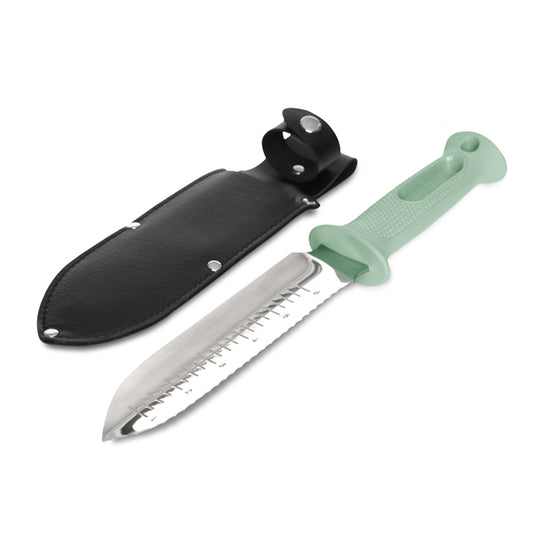
The Hoselink Garden Fork features four stainless steel tines - the sharp, pointed prongs that do the actual soil work. Stainless steel holds its point and edge through repeated use without rusting or bending, which matters when you're pushing through denser or more compacted soil.
The tines are designed to bite into soil cleanly and break it up effectively without needing excessive force. The soft-grip rubber handle cushions the impact and vibration of that work, reducing the strain on your hand and wrist during longer cultivation sessions.


Best used for
- Loosening and aerating compacted soil in beds and containers
- Cultivating and turning soil between plantings
- Working compost, fertiliser, or other amendments into existing soil
- Weeding between established plants where a full-sized fork would cause damage
- Breaking up surface crusting after rain or watering
The Garden Weeder - The Tool That Saves Your Back Your Plants
What is the best hand tool for removing weeds?
The best hand tool for removing weeds is a hand weeder with a stainless steel split-tip fork. The split tip gets under the weed's root system and lifts it cleanly from the soil without disturbing surrounding plants. This is particularly important in raised beds, borders, and containers where desirable plants grow close together. A weeder with an ergonomic handle reduces hand fatigue during extended weeding sessions.
Weeding is one of those gardening tasks that most people tolerate rather than enjoy - but the right tool makes it considerably less of a chore. The problem with improvising with a trowel or fork for weeding is that both are too broad: they disturb more soil than needed and can damage the roots of nearby plants in the process.
A dedicated hand weeder is narrow, precise, and designed specifically to get under a weed's root system and remove it cleanly - root and all. That last part matters. Weeds that are cut off at the surface often regrow from the root. A proper hand weeder lifts them out entirely, which means fewer repeat visits to the same spot.
What makes the Hoselink Garden Weeder different
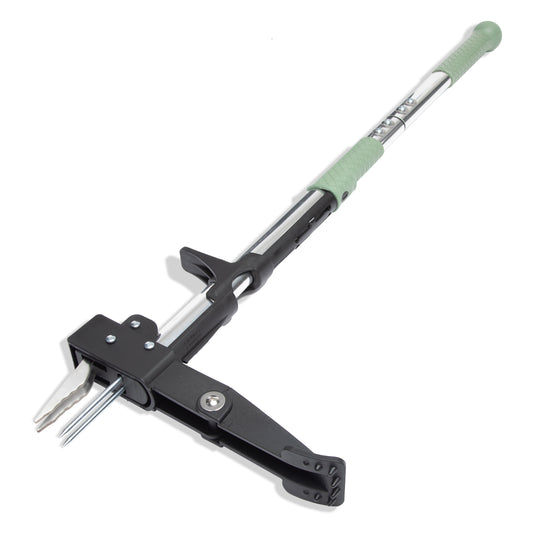
The Hoselink Garden Weeder features a stainless steel split-tip fork - a forked blade design that gets under a weed's root and lifts it free without slicing through surrounding plants or disturbing more soil than necessary. It's the kind of precision that makes weeding in a densely planted raised bed or border actually manageable.
The ergonomic soft-grip handle makes extended weeding sessions significantly more comfortable. If you're working through a bed that's gotten away from you, the difference between a comfortable handle and a hard plastic one becomes very apparent after twenty minutes.


Best used for
- Removing weeds from raised garden beds, borders, and lawns
- Lifting weeds from containers and potted plants without root disturbance
- Working in tight spaces between established plants
- Removing tap-rooted weeds (dandelions, dock) cleanly and completely
- Precision weeding in seedling beds where surrounding plants are vulnerable
Side-by-Side: Which Tool Does What?
Not sure which tool to reach for? Here's a quick reference guide.
|
Task |
Trowel |
Garden Fork |
Garden Weeder |
|
Digging planting holes |
✓ Best tool |
— |
— |
|
Transplanting seedlings |
✓ Best tool |
— |
— |
|
Potting and repotting |
✓ Best tool |
— |
— |
|
Loosening compacted soil |
— |
✓ Best tool |
— |
|
Aerating and cultivating |
— |
✓ Best tool |
— |
|
Working in amendments |
— |
✓ Best tool |
— |
|
Removing weeds (precision) |
— |
— |
✓ Best tool |
|
Lifting tap-rooted weeds |
— |
— |
✓ Best tool |
|
Weeding between plants |
— |
— |
✓ Best tool |
|
General soil moving |
✓ Yes |
✓ Yes |
— |
The Garden Tool Set -All Three, Better Value
Is it worth buying a garden tool set or individual tools?
For most home gardeners, buying a garden tool set is better value than purchasing individual tools separately - provided the set contains tools you'll actually use. The Hoselink Garden Tool Set includes all three essential hand tools (trowel, fork, and weeder) at a discounted bundle price of $64.80, compared to $72 if purchased individually. If you garden regularly across beds, containers, and borders, all three tools will earn their place.
If you're setting up a new garden - especially if you're pairing it with a Hoselink Metal Raised Garden Bed - the Garden Tool Set is the most practical starting point. All three tools are ones you'll reach for constantly across a season, and buying them together saves you money upfront.
- Garden Tool Set: $64.80 - all three tools together
- Individual tools: $24 each - trowel, fork, or weeder separately
- Saving with the set: $7.20 compared to purchasing all three individually

Who should buy the full set
- New gardeners setting up their first garden or raised bed
- Experienced gardeners replacing a worn-out tool collection
- Anyone who gardens across multiple areas - beds, containers, lawns, and border
- Those looking for a genuinely useful gift for a gardener - practical, quality, and complete
Who might prefer individual tools
- Gardeners who already own one or two quality tools and only need to fill a gap
- Those with a very specific focus - for example, a container gardener who primarily needs a trowel
- Anyone wanting to try one tool before committing to the full set
The Perfect Companion for Your Raised Garden Bed
If you've invested in a Hoselink Metal Raised Garden Bed, these three hand tools are the natural next step. The trowel handles transplanting day - moving seedlings from trays into their new home in the bed. The fork keeps the growing mix loose and well-aerated between plantings. And the weeder keeps the bed tidy through the season, removing intruders without disturbing the plants you've carefully established.
Together, they form a complete hand tool kit for raised bed gardening - everything you need to plant, tend, and maintain a productive growing space from spring through to the end of the season.
|
Growing Task |
Tool to Reach For |
|
Setting up a new raised bed — mixing and levelling soil |
Garden Fork |
|
Transplanting seedlings into the bed |
Garden Trowel |
|
Planting bulbs at the correct depth |
Garden Trowel (depth markers) |
|
Mid-season cultivation — keeping soil loose |
Garden Fork |
|
Working compost or fertiliser into the bed |
Garden Fork |
|
Removing weeds between established plants |
Garden Weeder |
|
Lifting tap-rooted weeds from the bed |
Garden Weeder |
|
Potting herbs or flowers in containers |
Garden Trowel |
Looking After Your Garden Hand Tools
Stainless steel garden tools are low-maintenance by design, but a few simple habits will keep them performing at their best for years.
Clean after every use
Knock or brush off soil after each session. For stubborn clay or compacted soil, a quick rinse and wipe-down takes thirty seconds and prevents any build-up that could dull the blade over time. Dry before storing.
Store dry
Moisture is the enemy of any metal tool, even stainless steel. Store your tools in a dry shed, garage, or covered area rather than leaving them outside exposed to rain. Hanging them off the ground keeps the blades in better condition long-term.
Wipe with oil occasionally
A light wipe of the blade with a rag and a few drops of general-purpose oil every few months helps maintain the stainless steel and keeps the tool moving smoothly through soil. It's a five-minute job that extends the life of a good tool significantly.
Check the handle connection
Periodically check that the handle-to-blade connection is tight and secure. A slight loosening is normal over extended use - address it early rather than letting it develop into a tool that's uncomfortable or unsafe to use.
Ready to Upgrade Your Tool Kit?
The right hand tools don't just make gardening easier - they make it more enjoyable. Less effort, less frustration, more time spent doing the part you actually love: growing things.
Pick up the individual tool you're missing, or start fresh with the complete Garden Tool Set and get all three essentials in one go. Either way, your garden - and your hands - will thank you.