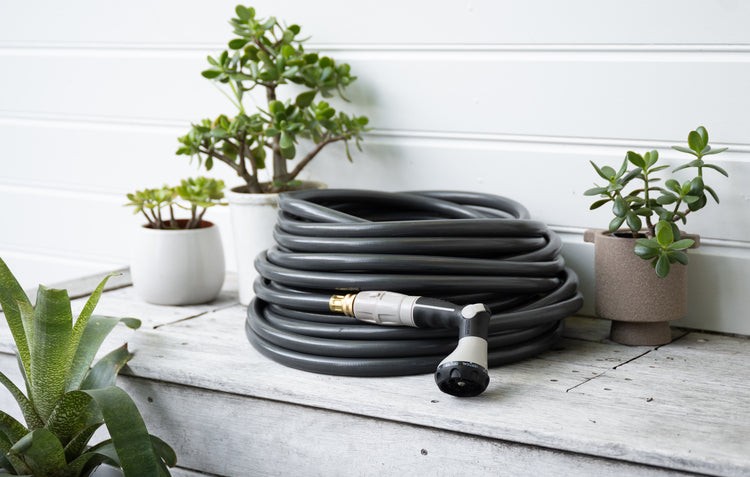
Your garden hose works hard. Every summer it gets dragged across pavers, coiled and uncoiled, left in the sun, and occasionally run over by the lawn mower (unless it's living on a Retractable Hose Reel where it stays out of harm's way between uses). Most of us don't think about our hose until the day it doesn't work - a sudden burst, a puddle at the spigot, or a kink that just won't quit.
The good news: a few minutes of inspection a couple of times a season can save you a soggy surprise, a wasted afternoon, and a higher water bill. Here's what to look for, and how to know when it's time for a new hose instead of another patch job.

Why Hose Checks Matter More Than You Think
A small leak doesn't just waste water, it can also mean lower pressure at your nozzle, uneven watering for your garden beds, and, if left unchecked, a hose that fails completely at the worst possible moment (usually mid-watering, right as you've stepped away). Regular checks are the easiest way to catch small issues before they become expensive ones.


5 Things to Check on Your Hose
1. The connector points. This is where most leaks start. Check both ends of the hose where it meets the spigot and where it meets your nozzle or sprinkler for drips or spray when the water's running. If you're tightening the same connection every week, the washer or fitting is likely wearing out.
2. Cracks and dry rot. Run your hand along the full length of the hose. Look (and feel) for brittleness, small cracks, or a rough, dry texture, especially on sections that get direct sun exposure. UV exposure is one of the biggest reasons hoses degrade over time.
3. Bulges or soft spots. Turn the water on and watch the hose along its length. Any spot that swells or feels softer than the rest under pressure is a weak point in the inner lining, and it's only a matter of time before it gives way.
4. Kinks that won't release. Occasional kinks are normal. Kinks that leave a permanent crease, or that keep forming in the same spot no matter how you coil it, mean the hose material has lost some of its flexibility.
5. Water pressure at the nozzle. If your pressure has dropped noticeably and you've already ruled out the spigot and nozzle, the culprit could be a partial blockage or a kink further up the line — or general wear reducing the hose's internal diameter.
Quick Fixes vs. Time for a Replacement
Not every issue means starting over. Here's a simple way to think about it:
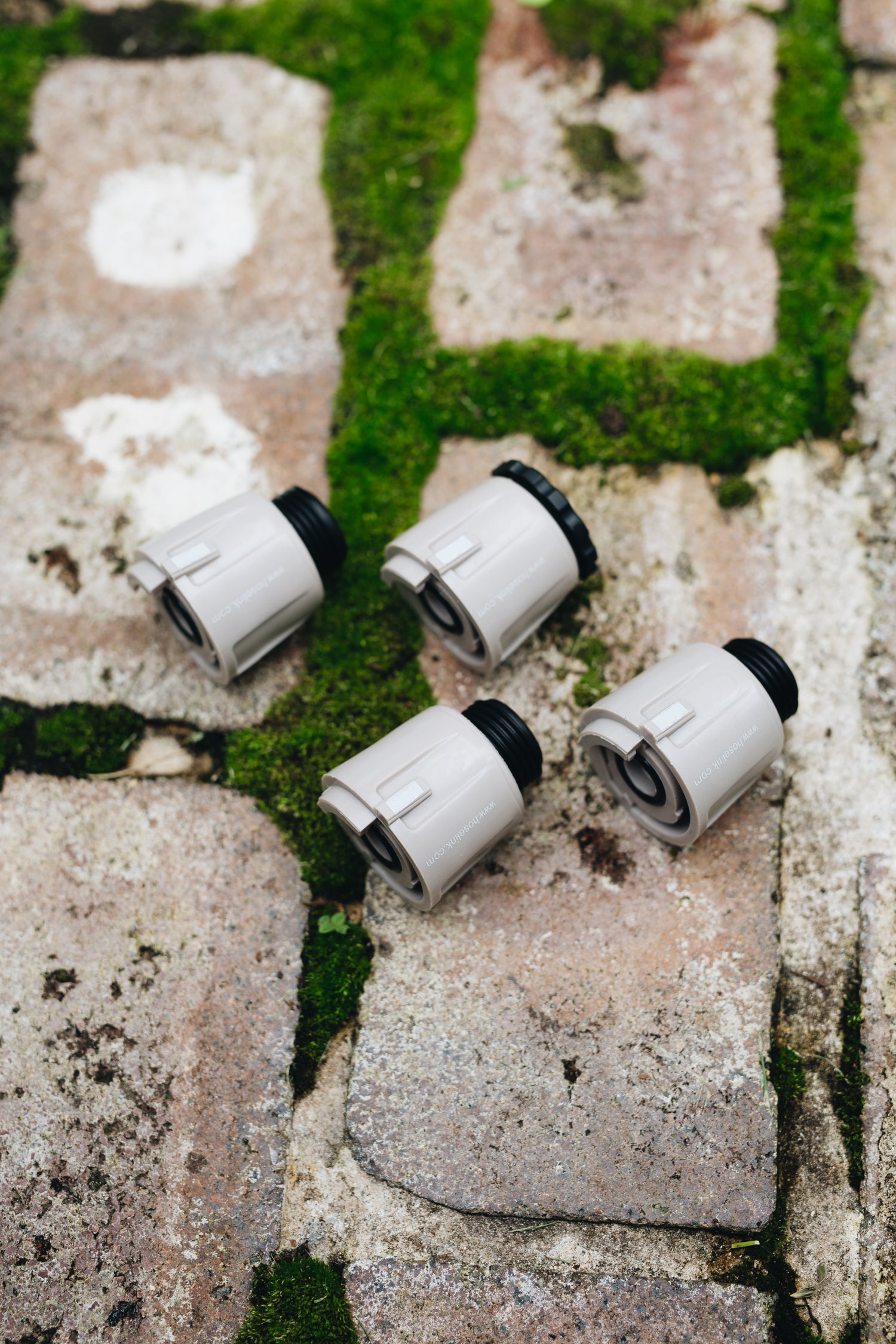
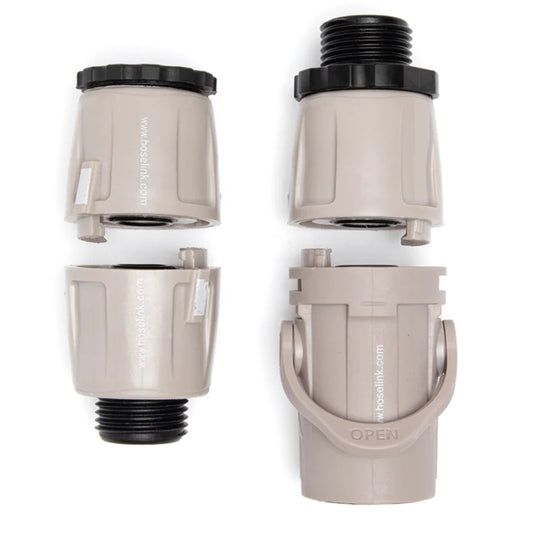
- Loose or leaking connector? Often a fix, not a full replacement. A Quick-Connect Garden Hose Fittings Set swaps out a worn or leaking fitting in seconds, so you're not stuck re-wrapping the same spot in plumber's tape every week.
- One cracked section? If it's a lightweight or lower-quality hose, cutting and re-fitting connectors is possible, but it's a temporary fix, not a long-term one.
- Cracking, bulging, or brittleness along multiple sections? That's your sign. The hose has done its job and it's time for a new one.

Choosing a Hose That Won't Let You Down
When it is time to replace, the goal is simple: buy once, buy right. Look for:
- UV-stabilized materials that hold up to sun exposure season after season
- Reinforced walls that resist kinking and won't collapse under pressure
- Solid brass or quality fittings at the connection points, since that's where most failures happen
- A hose length and diameter matched to your yard, so you're not fighting pressure loss over a longer run

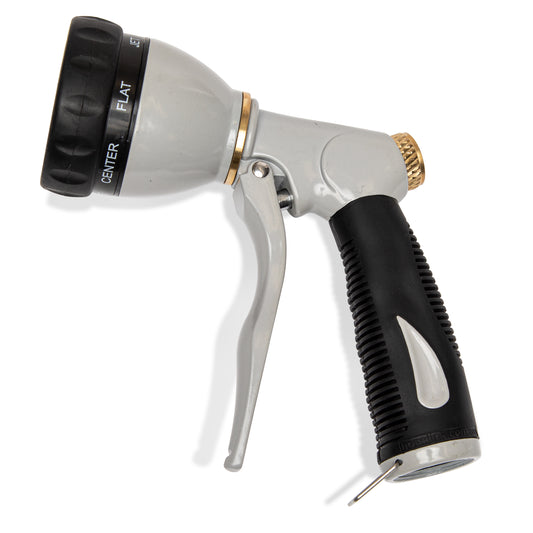
Want to Skip Most of This Checklist Entirely?
The single best way to cut down on hose wear is to stop the hose from lying around in the first place. Sun exposure, dragging across concrete, and tangled coils are the top three causes of the damage covered above and a retractable hose reel solves all three at once.
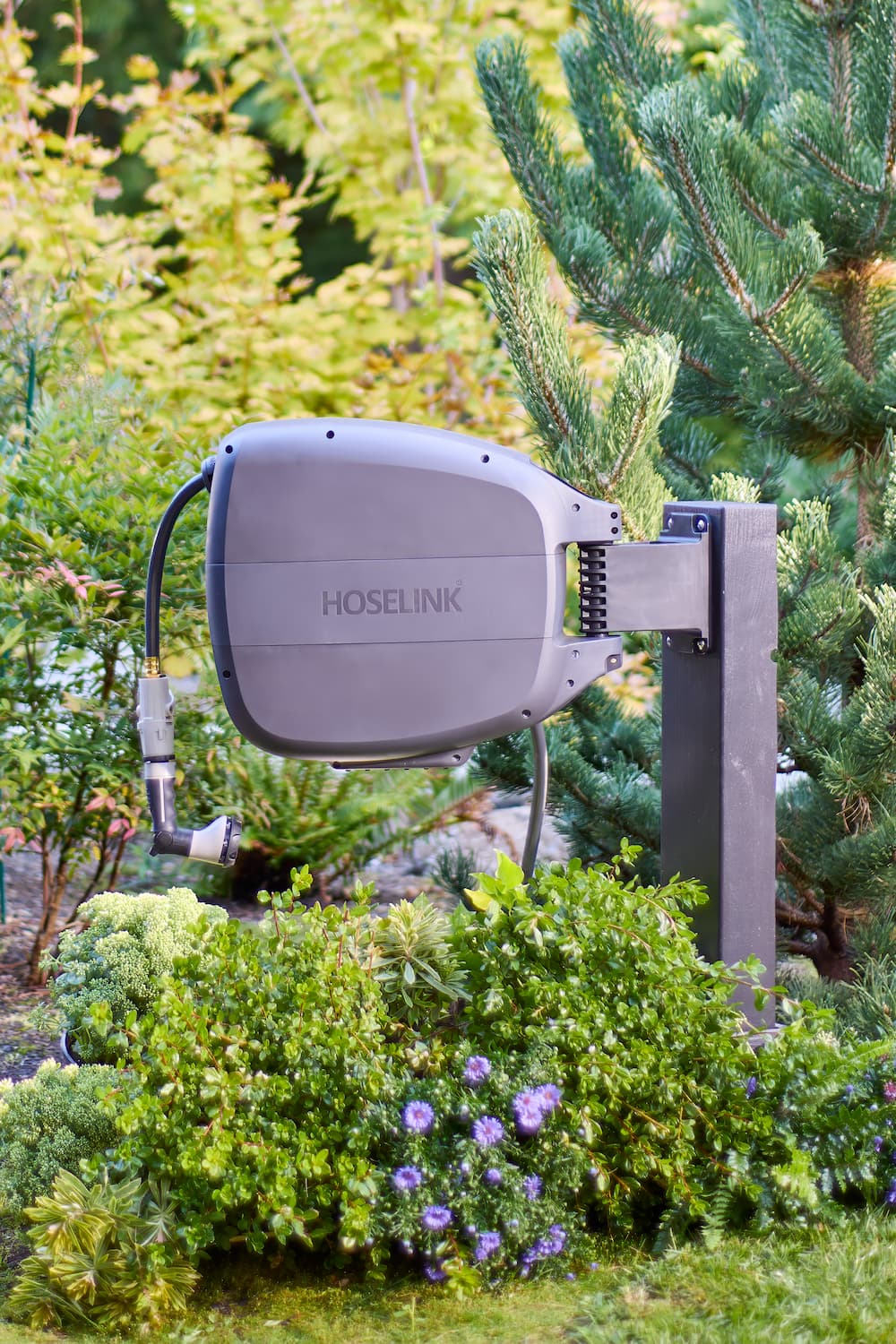
The Classic 82ft Hi-Flow Retractable Hose Reel mounts to your wall and retracts automatically after every use, so the hose is never left baking in the sun or crushed under foot traffic. It comes with a burst-proof hose already built in, so you get the reel and the wear-resistant hose in one system. If you water from more than one spot in the yard, a Second Wall Bracket lets you move the same reel between locations instead of running a second hose across the lawn.
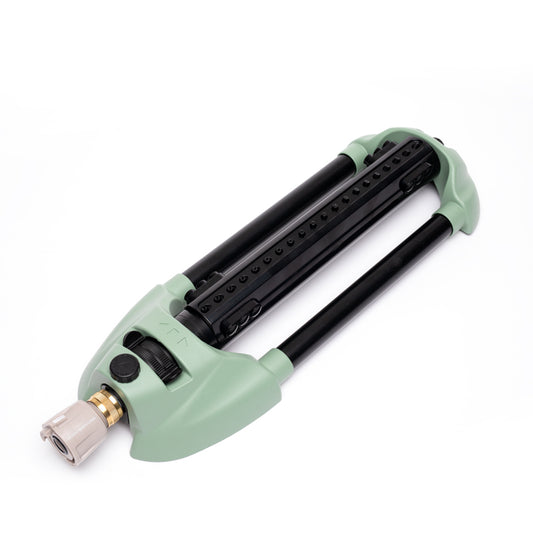
Finish the setup with a Hose Reel Cover if your reel lives somewhere fully exposed to the elements, and a Premium Metal Oscillating Sprinkler to help cover larger areas.
A hose and connector system built to last means fewer checks, fewer surprises, and more time actually enjoying your garden.
A Simple Seasonal Habit
Twice a season, once before the heavy watering months begin and once before you pack the hose away. Walk the full length of your hose with the water running. It takes less than five minutes and it's the easiest maintenance habit in your whole yard.
Your garden deserves a hose that keeps up with it. Check it, care for it, and when it's time, replace it with one built to go the distance.