Succulents thrive on bright light, fast draining soil and infrequent deep watering. Give them as much sun as they will tolerate, plant them in a gritty mix in a pot with drainage holes, and water only when the soil is fully dry, then soak thoroughly. Overwatering, not underwatering, is the number one killer of succulents. Get those three things right and the rest of succulent care is simple.
This guide covers everything you need to keep succulents healthy indoors and out: how much light they want, how to water them the right way, the soil and pots that suit them, how to grow more for free, and how to fix the most common problems.
How much light do succulents need?
Most succulents want bright light, ideally several hours of direct sun, or the brightest windowsill you have indoors (a window facing south or west in the northern hemisphere). Plenty of light is what keeps them compact, colorful and healthy.
Too little light makes them etiolate, which is the technical word for stretching tall, turning pale and growing leggy as they reach for the sun. If you notice that happening, move the plant somewhere brighter. Introduce succulents to strong sun gradually, though. A plant moved straight from shade into full afternoon sun can scorch, so give it a week or two to acclimatize. If your brightest window still is not enough, especially through a dark winter, a simple grow light left on for most of the day will keep them compact.
Watering: the soak and dry method
Watering is the single most important succulent skill, and the soak and dry method is all you need to learn. Water only when the soil is completely dry, then water thoroughly until it runs from the drainage holes, and do not water again until the soil has dried out once more.
In practice that is often every 1 to 3 weeks, depending on heat, light and season, which is far less than a typical houseplant. The trick is learning to read your plants:
- Signs you are overwatering: soft, mushy, translucent or yellowing leaves, and stems turning black at the base, which is rot.
- Signs of underwatering: wrinkled, puckered leaves that plump back up within a day or two of a good drink.
When in doubt, wait. Succulents recover from thirst far more easily than from rot.
The best soil and pots for succulents
- Use a mix that drains fast. Reach for a cactus or succulent mix, or amend regular potting soil with coarse sand, perlite or pumice (roughly a third grit) so water drains away quickly and the roots never sit wet.
- Make sure the pot has drainage holes. Pots without holes trap water and rot roots. Terracotta is a great choice because it also wicks moisture away from the soil, which suits succulents well.
- Do not overpot. A snug pot dries out faster than a large one full of damp soil, so choose a container only slightly bigger than the plant.
Growing succulents indoors vs outdoors
Outdoors, succulents love sun and airflow, but most tender types need protection from frost and from prolonged heavy rain. If a cold snap or a wet week is on the way, move containers under cover.
Indoors, the challenge is light. Give them your brightest spot and rotate the pot every week or two so they grow evenly instead of leaning toward the window. Hardy types such as Sempervivum and many Sedum tolerate cold and can stay outside all year in many climates.
Can you use tap water on succulents?
Tap water can work, but it isn't ideal for succulents long-term. Municipal tap water often contains chlorine and fluoride, which offer no benefit to the plant and can build up in the soil over time — watch for white crust on the soil surface or terracotta pot walls, a sign the water is too alkaline. Succulents prefer slightly acidic water, in the pH 6.0–6.5 range.
If you're using tap water, let it sit out for a day or two before watering to allow some chlorine to dissipate. For the best results, use distilled water or, even better, collected rainwater — it's naturally acidic, arrives oxygenated, and helps flush accumulated salts from the soil as it drains.
Unusual succulent varieties worth growing
Beyond the classics, a few standout varieties bring real character to a succulent collection:
- Black Aeonium - a dramatic succulent "tree" reaching up to 3ft, with near-black leaves and bright yellow flowers.
- String of Beads -trailing, pebble-like beaded stems, ideal for hanging baskets, with sweetly scented white flowers.
- Living Stone - mimics smooth stones until it bursts into striking white blooms.
- Moonstone - pale green to white, egg-shaped foliage sometimes flushed with lavender-blue, topped with orange-red flower spikes.
How to propagate succulents
One of the best things about succulents is how easily they multiply. There are three main ways to grow more plants for free:
- Leaf cuttings: gently twist a healthy leaf off the stem, let the end callus (dry over) for a few days, lay it on dry mix, and mist lightly until tiny roots and a small rosette form.
- Stem cuttings: cut a stem, let it callus for several days, then plant it in dry mix and water sparingly once it has rooted.
- Offsets, or pups: many succulents produce baby plants around the base. Separate these and pot them up once they have their own roots.
Common succulent problems and how to fix them
- Stretching or leggy growth: not enough light. Move the plant to a brighter spot. You can also behead the top and replant it to get a more compact plant.
- Mushy, translucent leaves or a black stem: overwatering and rot. Cut back on water, remove the rotted parts, and repot in dry, gritty mix.
- Brown, scorched patches: sunburn from moving a plant into strong sun too quickly. Acclimatize plants gradually over a week or two.
- White cottony spots: mealybugs. Dab them with diluted isopropyl alcohol and isolate the plant until the pest is gone.
- Small flying gnats around the soil: fungus gnats, drawn to consistently damp soil. Let the plant dry out fully between waterings; if the mix stays soggy, unpot and remove wet soil from the roots to prevent rot. A sticky trap will catch adults while you correct the watering.
- Stunted growth with no visible pests on the leaves: check for root aphids, which hide beneath the rootball and cause yellowing or lack of vigor with no obvious cause. Unpot away from other plants, treat with a systemic insecticide or a Spinosad-based product, and repot in fresh soil.
Seasonal succulent care
Most succulents grow actively in the warmer months and rest over winter (a few are the reverse). Water more during active growth and much less during dormancy, when overwatering is most dangerous. Feed lightly with a diluted fertilizer that is low in nitrogen, only once or twice during the growing season.
The right watering tools for succulents
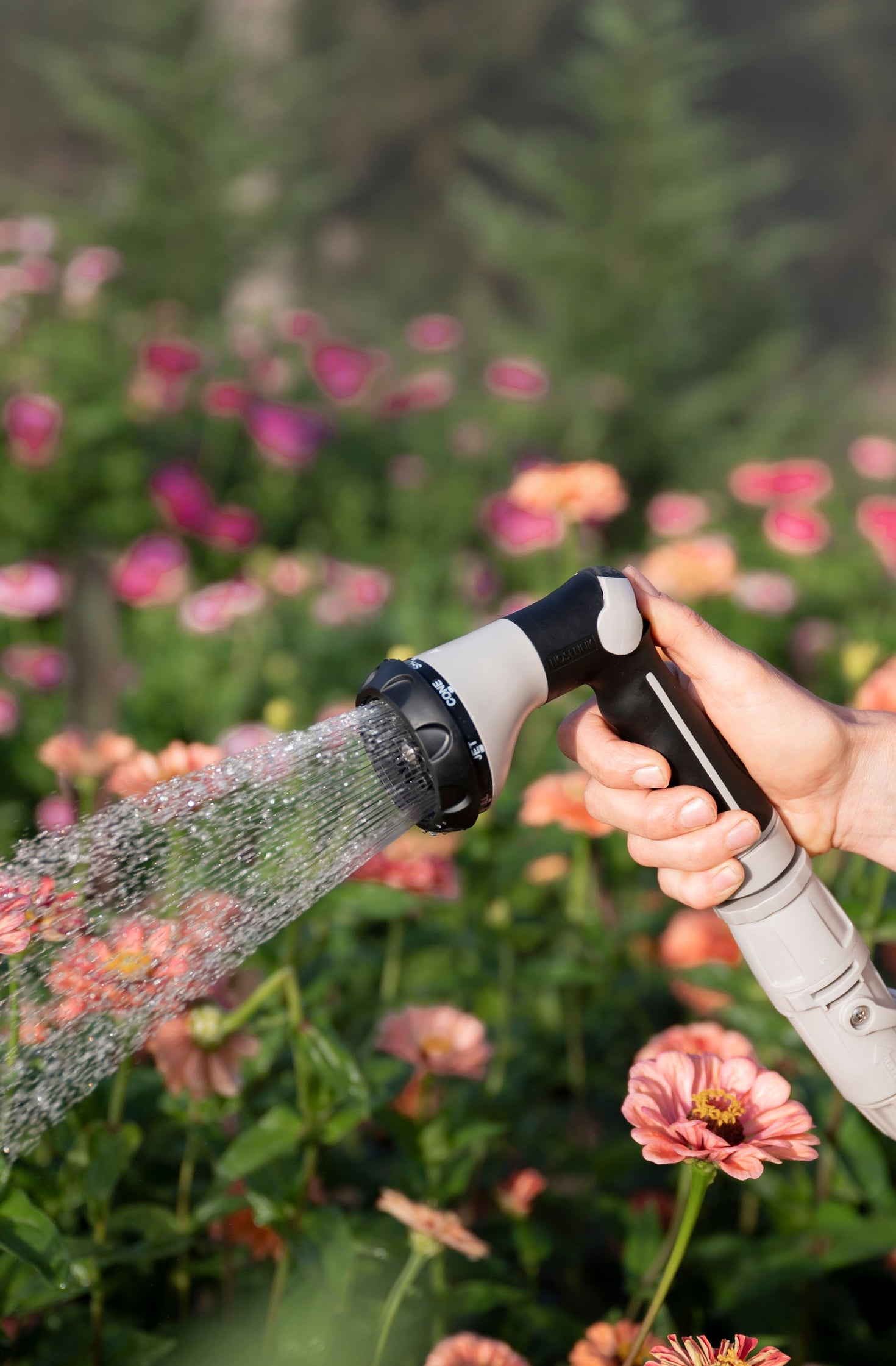
Because succulents want infrequent, controlled watering at soil level rather than over the leaves, the right tools make it much easier to get right. A spray nozzle set to a gentle shower or a soft, low flow lets you soak the soil without splashing the rosettes. Outdoors, a hose timer paired with a soaker hose keeps larger plantings on a consistent, restrained schedule. Browse Hoselink's full range of watering nozzles, timers and accessories to set yours up.
Give succulents light, a gritty mix and a pot that drains, water them only when they are dry, and you will have tough, good looking plants that are easy to grow and even easier to multiply. Want more watering know how? Read our guide to watering your garden smarter, or explore more articles over on the Get into Gardening blog.